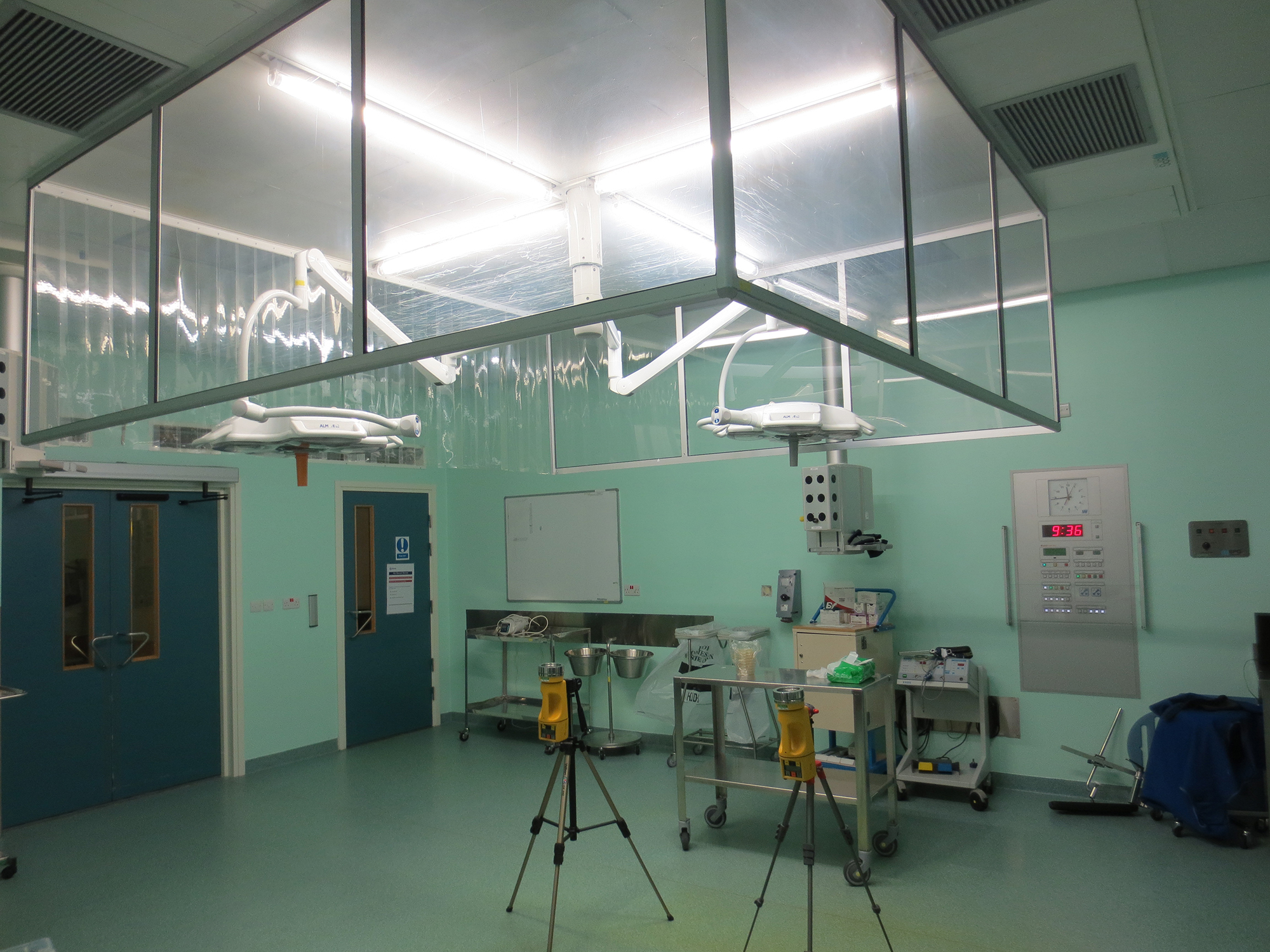
Clinical areas are defined as spaces within the building where surgical or medical treatment is administered to patients. This includes patient bedrooms.
Non-clinical areas are defined as spaces where patients may be present within a healthcare establishment that are considered critical to its ability to provide healthcare. Typically, ventilation systems serving the following are considered critical:
- Operating suites of any type including rooms used for image-guided surgical procedures and their recovery areas;
- Airborne isolation facilities, both source and protective;
- Critical care areas and neonatal units;
- Invasive treatment, endoscopy and bronchoscopy rooms;
- Containment level 3 laboratory;
- Pharmacy aseptic preparation facility;
- Inspection, assembly and packing (IAP) room in a sterile services department;
- MRI, CAT and other types of emerging imaging technologies that require particularly stable environmental conditions to remain within calibration;
- Any system classified as an LEV system under the COSHH Regulations;
- Any other system that clearly meets the definition that “a loss of service from such a system would seriously degrade the ability of the premises to deliver optimal healthcare”.
The aforementioned Critical Ventilation systems are inspected annually during an Annual Critical Ventilation Verification (ACVV) exercise, in addition quarterly or biannual inspections are carried out in accordance with HTM 03-01 or HTM 2025 (if applicable).
The purpose of the inspection is to establish that:
- The system is still required
- The plant conforms to the minimum standard
- The fire containment has not been breached (by others)
- The general condition of the system is adequate
- The fabric of the area served is suitable for the function
- The system performance is adequate with respect to the functional requirement
The Local Exhaust Ventilation (LEV) section of the COSHH regulations contains a statutory requirement that systems installed to contain or control hazardous substances be examined and tested at least every 14 months by a competent person (P601 certificated). The statutory inspection and test must be of the complete system from the point of capture to the point of discharge.